







 Analytical Equipment
 Microbiology Equipment
- Gravimetric Diluters and Sample Weighing Systems
- Mediaprep Automated Media Preparators
- Mediafill Automated Media Distributors
- Manual Media Dispensers
- Lab Blenders / Homogenizers
- Automated Spiral Platers
- Manual Colony Counters
- Automated Colony Counters
- Inhibition Zone Readers
- Automated Incubators and Colony Counters
- Biosafety Cabinets
- Laminar Flow Hoods
 Temperature, Humidity, and Pressure Measuring Instruments
 Other Basic Equipment
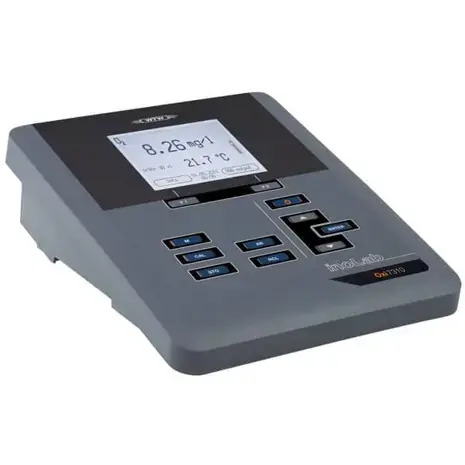 Multiparameter Water Quality Meters
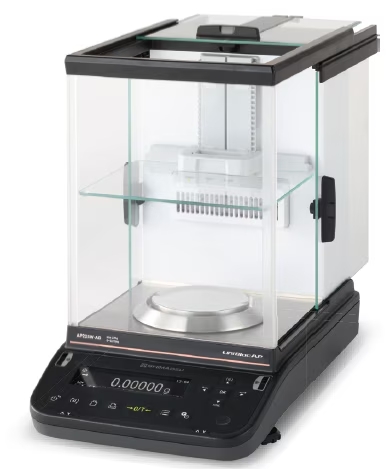 Balances
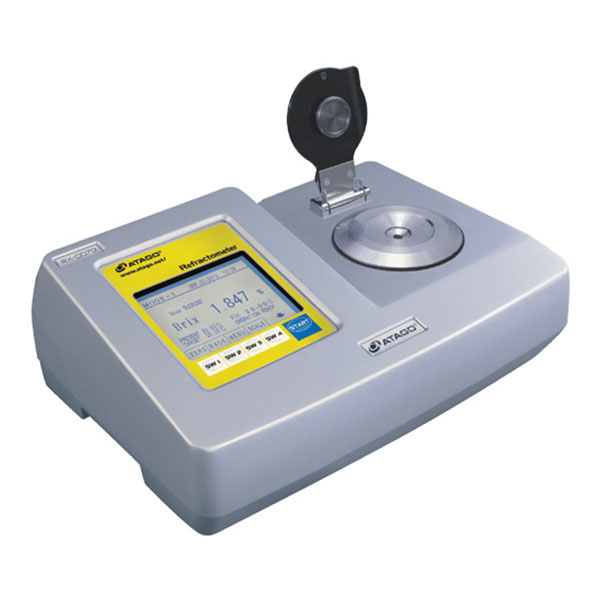 Polarimeters, Refractometers
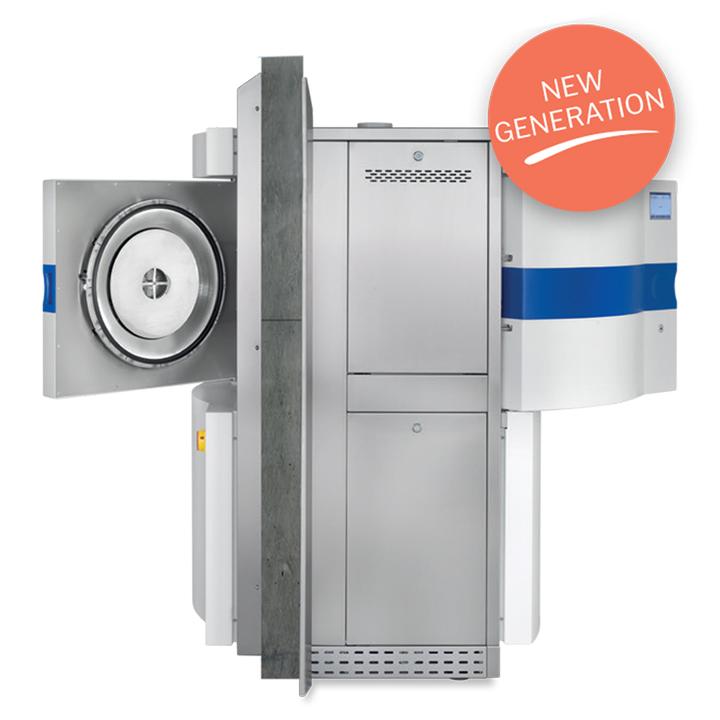 Autoclaves
 Biotechnology Equipment and Solutions
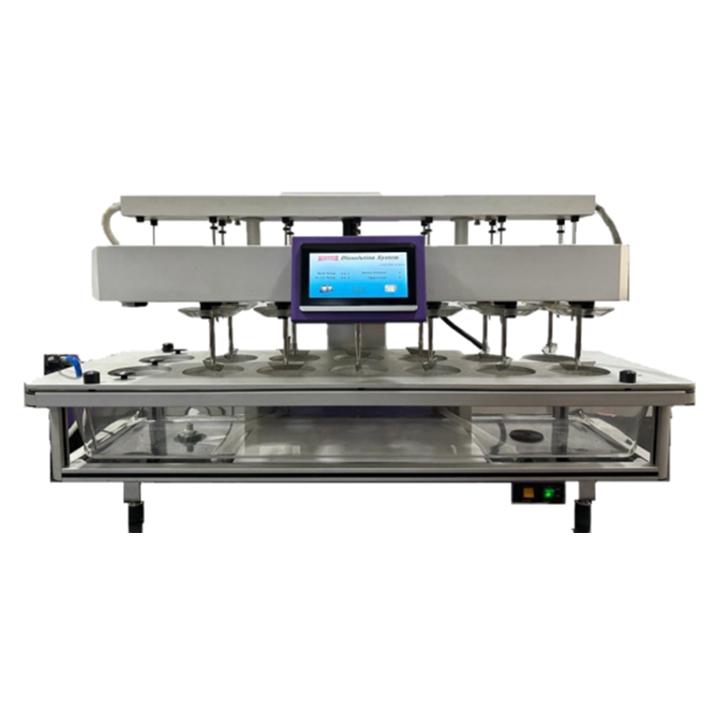 Pharmaceutical Equipment
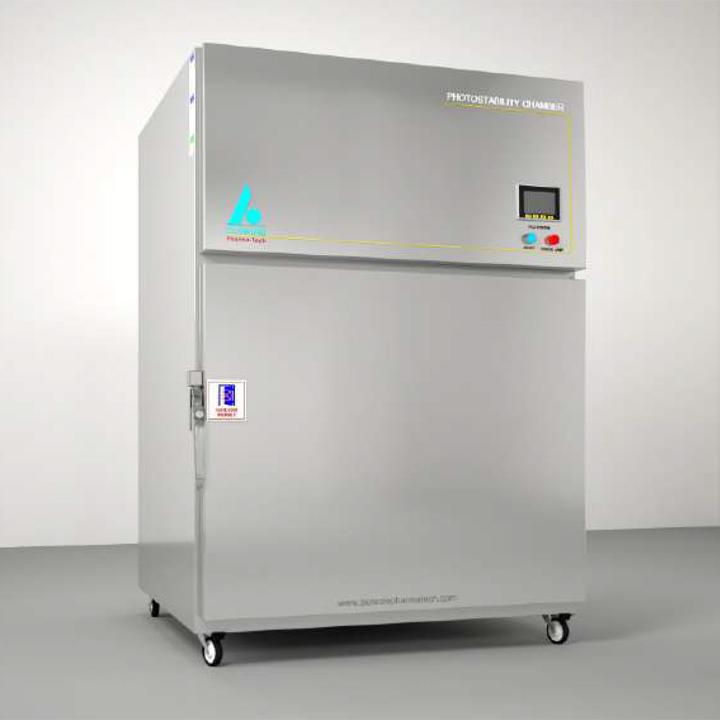 Shelf-life Testing Equipment
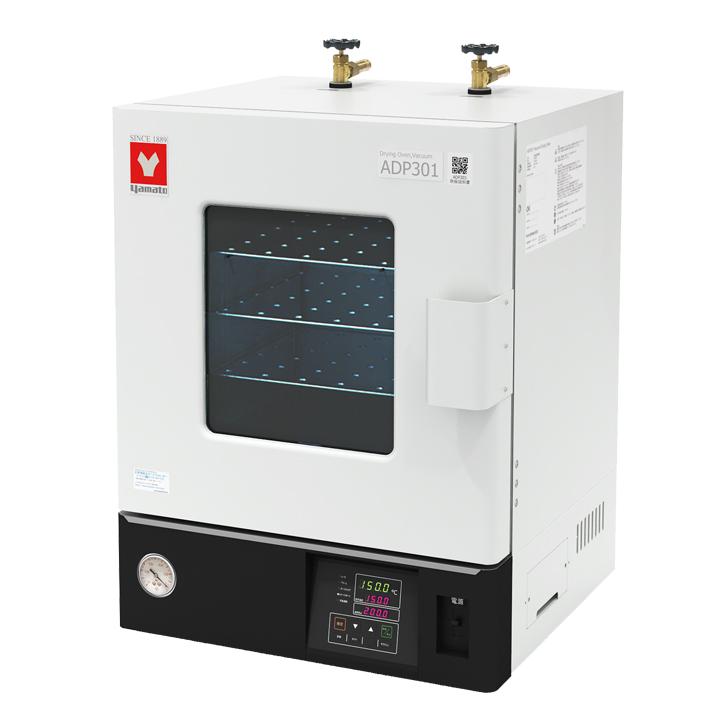 Drying Ovens
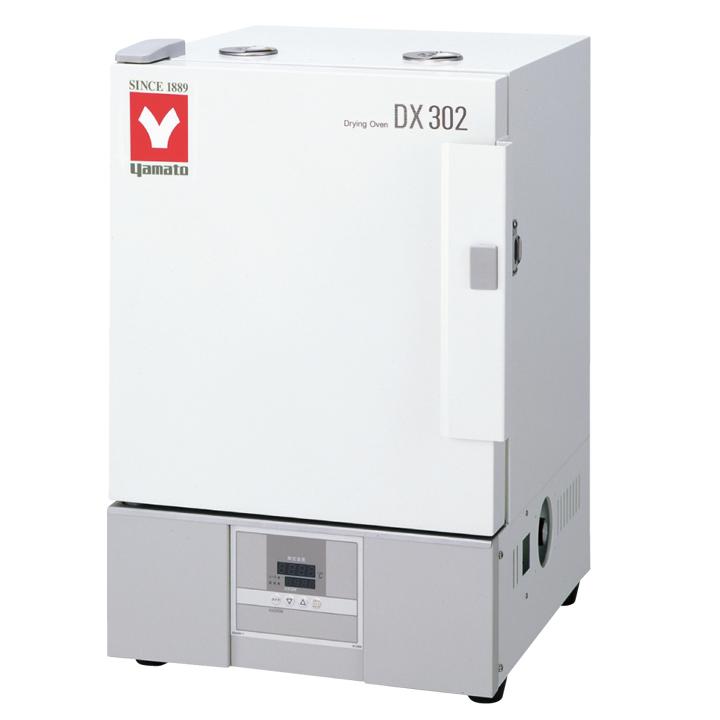 Incubators
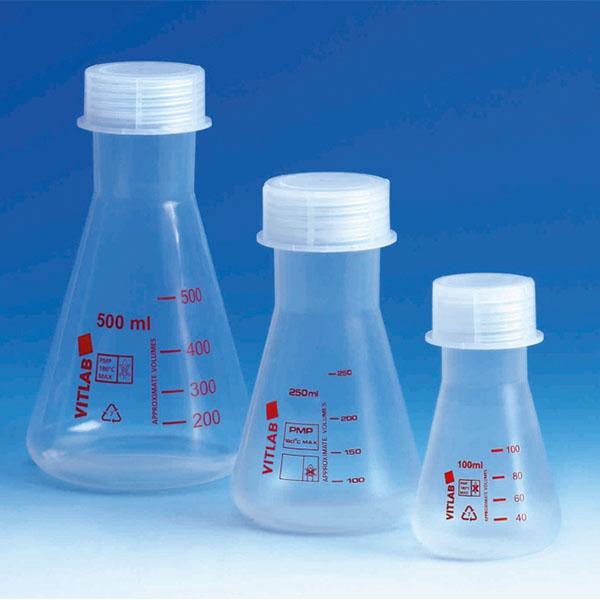 Laboratory Flasks
 Beakers, Measuring Jugs
 Liquid Handling Tools
 Sampling Tools
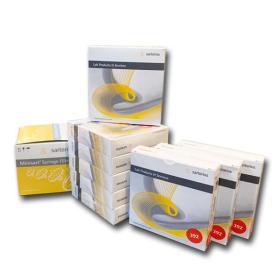 Filtration Tools and Consumables
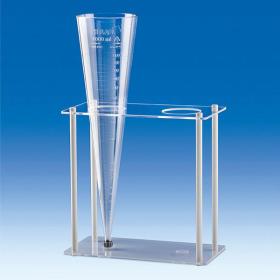 Racks and Stands
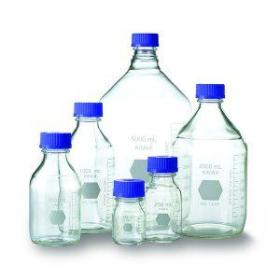 Laboratory Bottles and Vials
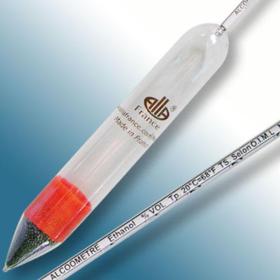 Thermometers, Hydrometers, Baumé Hydrometers, Alcoholmeters
 Pipettes
 Test tubes
 Graduated cylinders
 Funnels
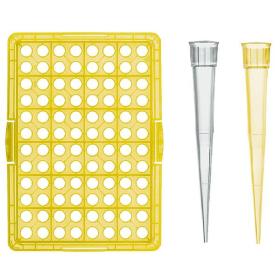 Tips & tip boxes
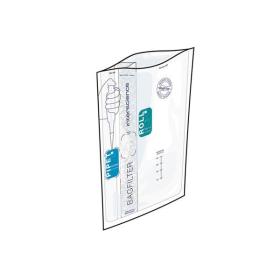 Homogenizer bags
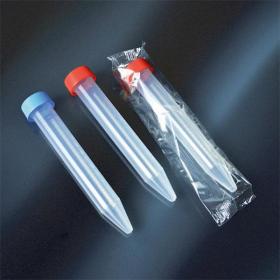 Centrifuge tubes
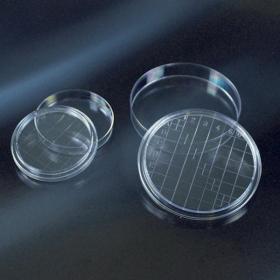 Petri dishes
 Others
- Glass capillary tubes
- Glass melting point tubes
- Condensers
- Plastic weighing boats
- Glass stirring rods
- Filtration and separation equipment
- Alcohol burners
- Glass weighing bottles
- Crucibles
- Crucible tongs
- Blender bag openers
- BagClip sealing clips
- Autoclave deodorant capsules
- Magnetic stir bars
- Test tube brushes
- Glass watch glasses
- Glass beads
- Glass wool
- Glass slides
- Plastic buckets
- Stainless steel bucket
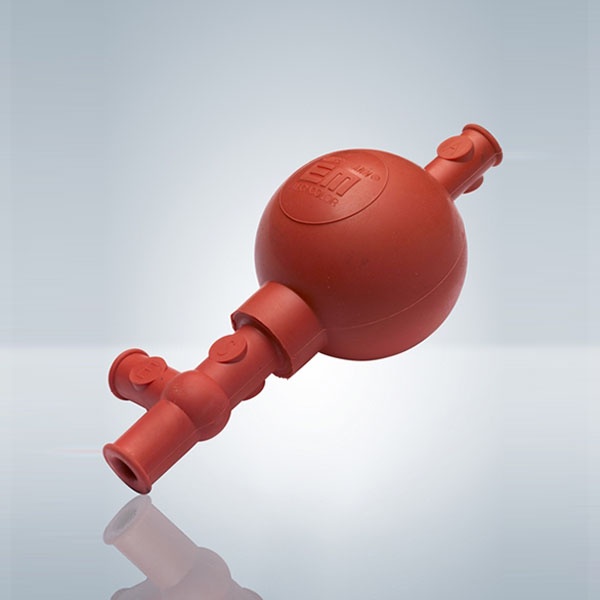
- Rubber bulb
- Inoculation loop
- Sampling rod
- Plastic spoon
- Stainless steel spoon
- Plastic tweezers
- Glass burette
- Glass slide
- Glass filter crucible
Funnels
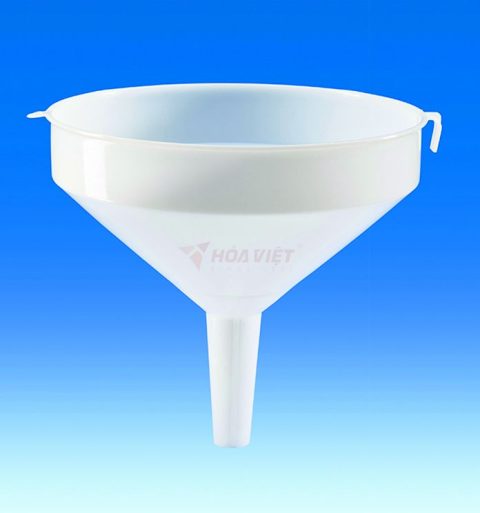
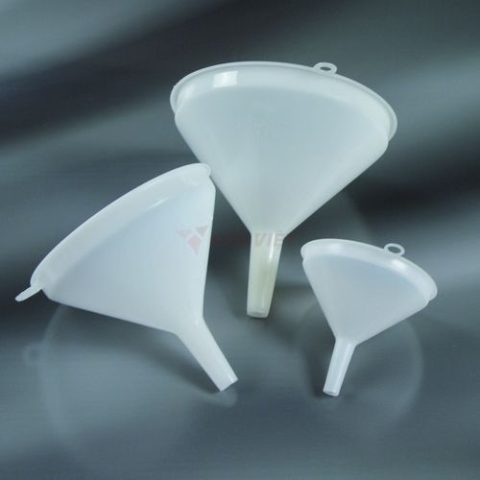
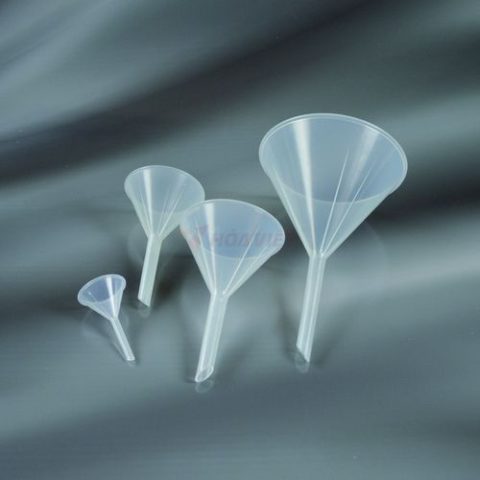
Introduction to Funnels
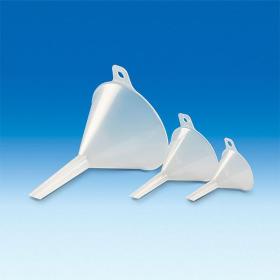
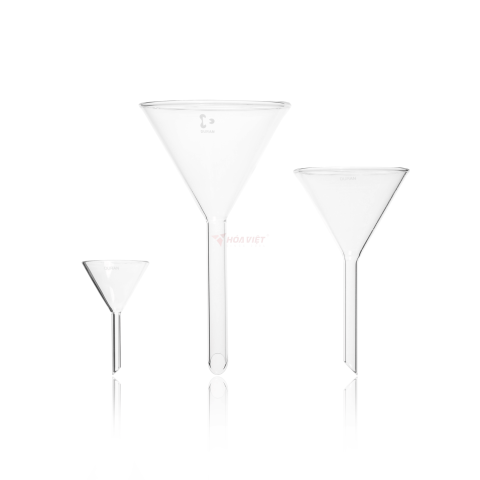
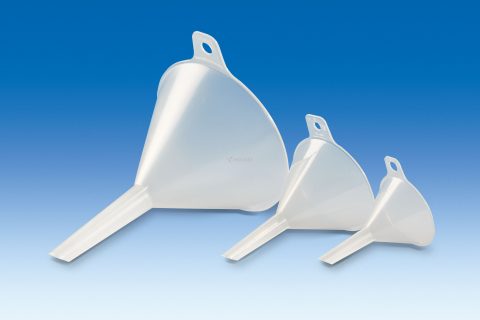
Funnels are laboratory tools used for pouring and transferring liquids or chemicals into narrow-necked containers, or supporting filtration processes to separate solids from liquids. Depending on analytical requirements and the properties of solvents or chemicals, users can choose funnels made of borosilicate 3.3 glass, autoclavable PP plastic, HD-PE plastic, or porcelain.
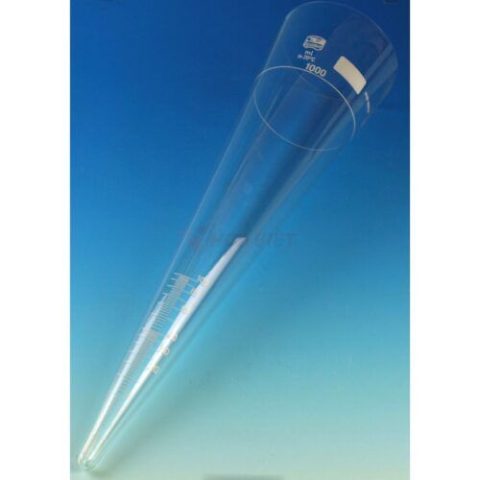
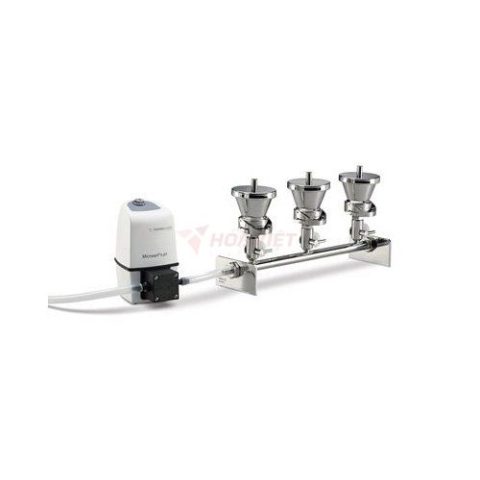
Beyond materials, selection is based on design and application, such as short-stem funnels, Buchner funnels for filtration, Imhoff cones for settleability determination, or microbiology manifold filter funnels. Dimensions and capacities are also diverse, with diameters ranging from 30mm to 400mm and capacities from 3.5ml to 1000ml. Hoa Viet currently distributes funnel lines from brands including Aptaca, Assistent, Duran, Jipo, Sartorius, and Vitlab.
When should PP plastic funnels be preferred over glass funnels?
PP plastic funnels are suitable for routine operations requiring mechanical durability to prevent breakage, and they are autoclavable. Meanwhile, borosilicate glass 3.3 funnels are the optimal choice when working with aggressive chemicals or requiring high thermal resistance.
What is a Buchner funnel commonly used for in laboratories?
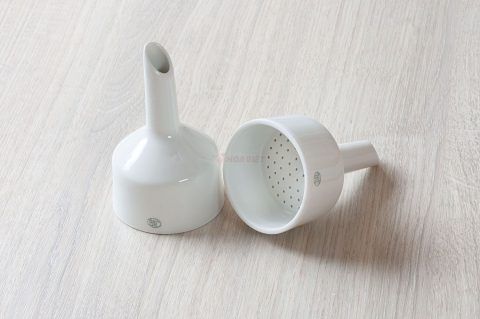
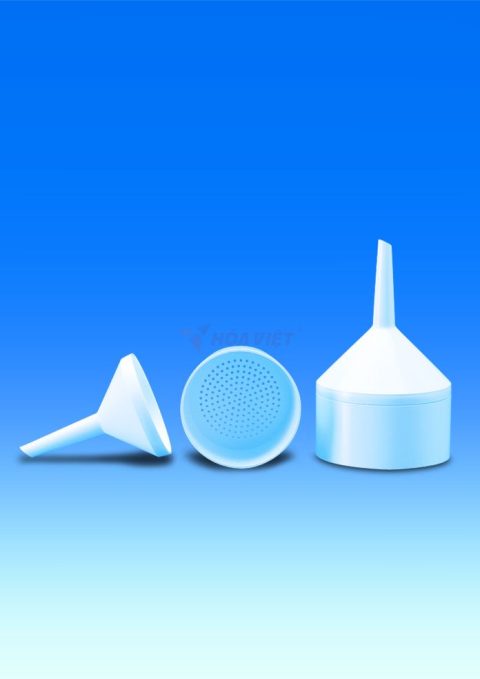
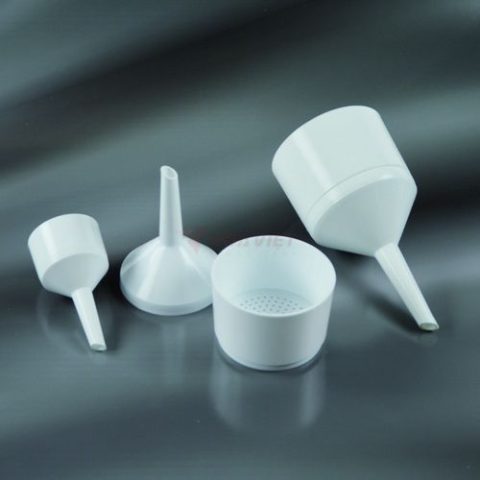
Porcelain or PP plastic Buchner funnels are typically paired with filter paper or membranes for vacuum filtration, enabling rapid separation of solids from liquids. This apparatus is commonly used in analytical workflows and sample purification.
In which analyses are Imhoff cones used?
The Imhoff cone features a graduated, conical design specifically used to determine the volume of settleable solids in water and wastewater analysis. Thanks to its dedicated structure, analysts can easily monitor and quantify sediment after the specified settling time.
Which brands of laboratory funnels does Hoa Viet currently supply?
Hoa Viet distributes genuine funnels from Aptaca (Italy), Jipo (Czech Republic), and German manufacturers including Assistent, Duran, Sartorius, and Vitlab. Customers can contact Hoa Viet directly for technical advice tailored to their specific needs.
